What a truck dispatcher does
A truck dispatcher keeps commercial tractors and trailers moving safely and profitably. Each morning you check which drivers are empty, read their Electronic Logging Device (ELD) hours, search load boards or broker calls for freight, negotiate a rate confirmation, and coordinate pickup and delivery appointments.
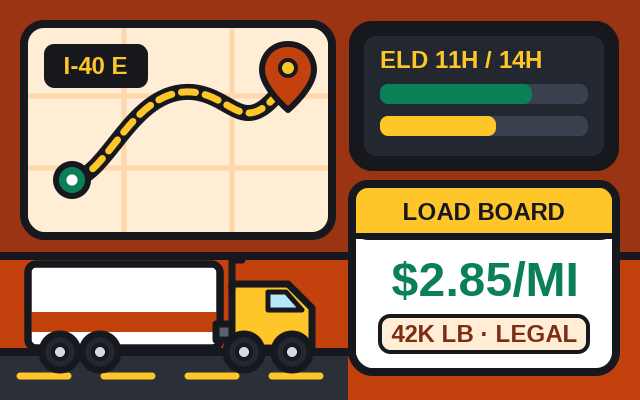
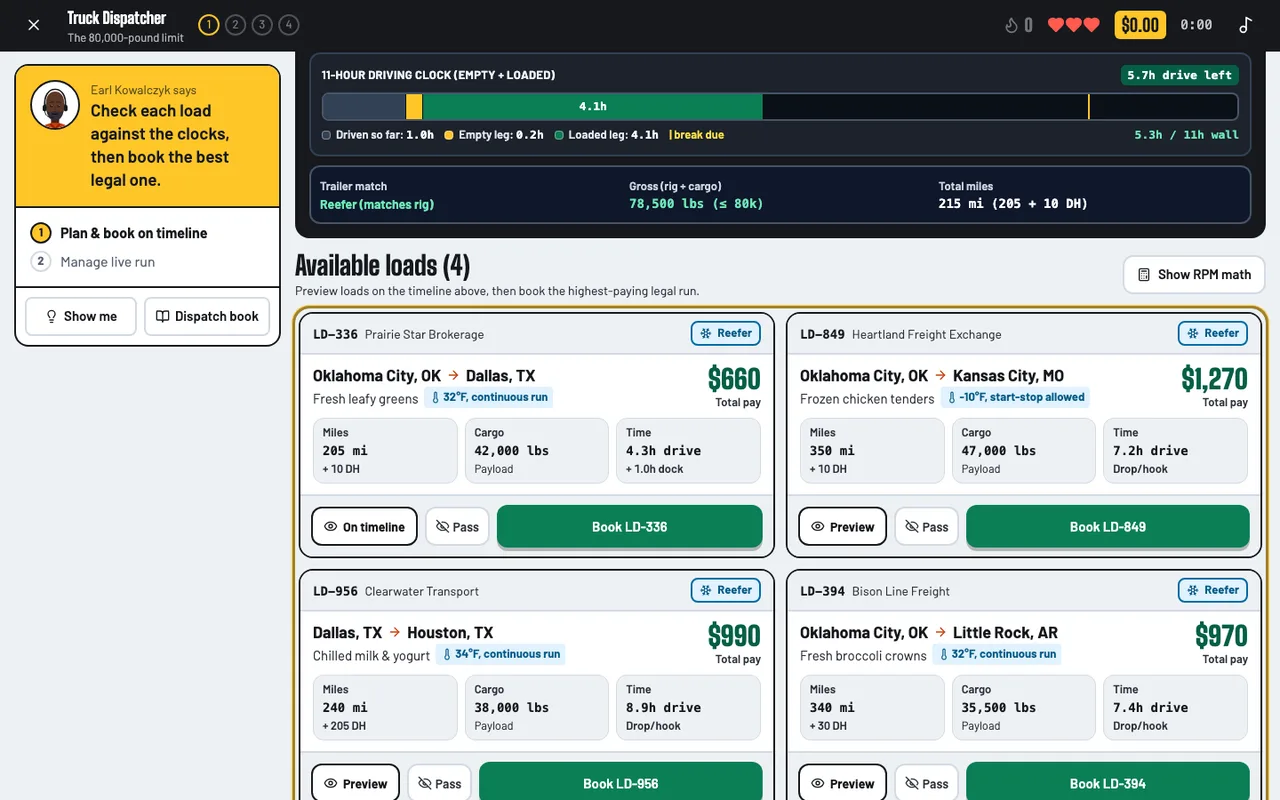
Good dispatching is equal parts safety compliance and fast math. A load that pays $1,400 looks great until you notice 200 deadhead miles, a 49,000-pound cargo weight that puts the rig over 80,000 lbs, or a three-hour shipper live load that blows the driver's 14-hour window.
- Match freight to the right trailer: Dry Van, Reefer or Flatbed
- Calculate loaded and all-in rate per mile (including empty deadhead miles)
- Check empty tare weight plus cargo weight against the 80,000 lb Interstate limit
- Verify FMCSA Hours of Service (11-hour drive, 14-hour window, 30-minute break)
- Track check-calls, reefer pre-cool temperatures, Bills of Lading and detention
What a dispatch shift feels like
Morning starts with check-calls: confirming overnight arrivals, collecting signed Bills of Lading, and getting empty trucks booked before regional freight dries up. Midday brings broker calls, dock delays, reefer temperature confirmations, and scale checks.
Calm communication matters as much as spreadsheets. Drivers rely on dispatchers never to push them into illegal hours or overweight runs, while brokers rely on straight answers about ETAs and delays.
Federal rules every dispatcher checks
Interstate property-carrying drivers follow FMCSA Hours of Service rules (49 CFR Part 395): no more than 11 hours of driving after 10 consecutive hours off duty, no driving after the 14th consecutive hour after coming on duty, and no driving once 8 hours of driving have passed without a 30-minute break from driving. Empty miles to a pickup are driving time like any other.
Federal law caps Gross Vehicle Weight on the Interstate System (tractor, trailer, fuel and cargo combined) at 80,000 lbs, with 20,000 lbs on a single axle and 34,000 lbs on a tandem; the bridge formula can require a lower gross weight, depending on the number and spacing of the axles. The cargo can only be what the empty rig leaves: in this game the empty rigs weigh 33,500 to 37,000 lbs.
Pay, outlook and how to start
According to O*NET OnLine (43-5032, Dispatchers, Except Police, Fire, and Ambulance), median pay in 2025 was $50,340 a year, or $24.20 an hour, across 203,500 U.S. jobs.
Most dispatchers enter with a high school diploma or GED and learn load boards, TMS software and carrier lanes through on-the-job training. Even with a projected employment decline (-1% or lower) from 2025 to 2035, O*NET projects about 16,000 openings a year from retirements and turnover.