What a bank teller does
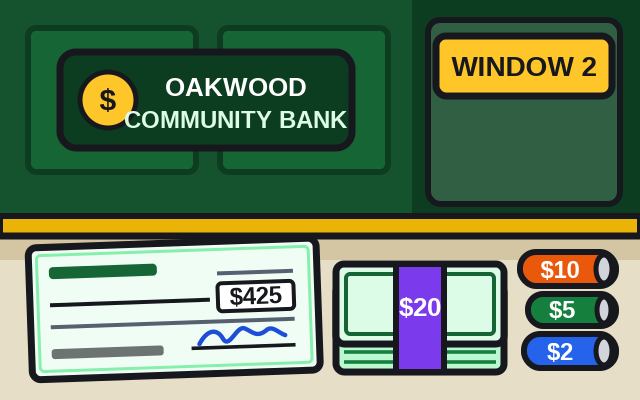
A bank teller is the frontline face of a retail bank or credit union, processing everyday deposits, cash withdrawals, check cashing, change orders and account inquiries at the teller window.
Accuracy and compliance matter on every customer visit. Tellers perform check verification front and back, confirm customer identity before releasing funds, count strapped bills and coin rolls, apply Regulation CC check holds and follow federal Bank Secrecy Act reporting rules.
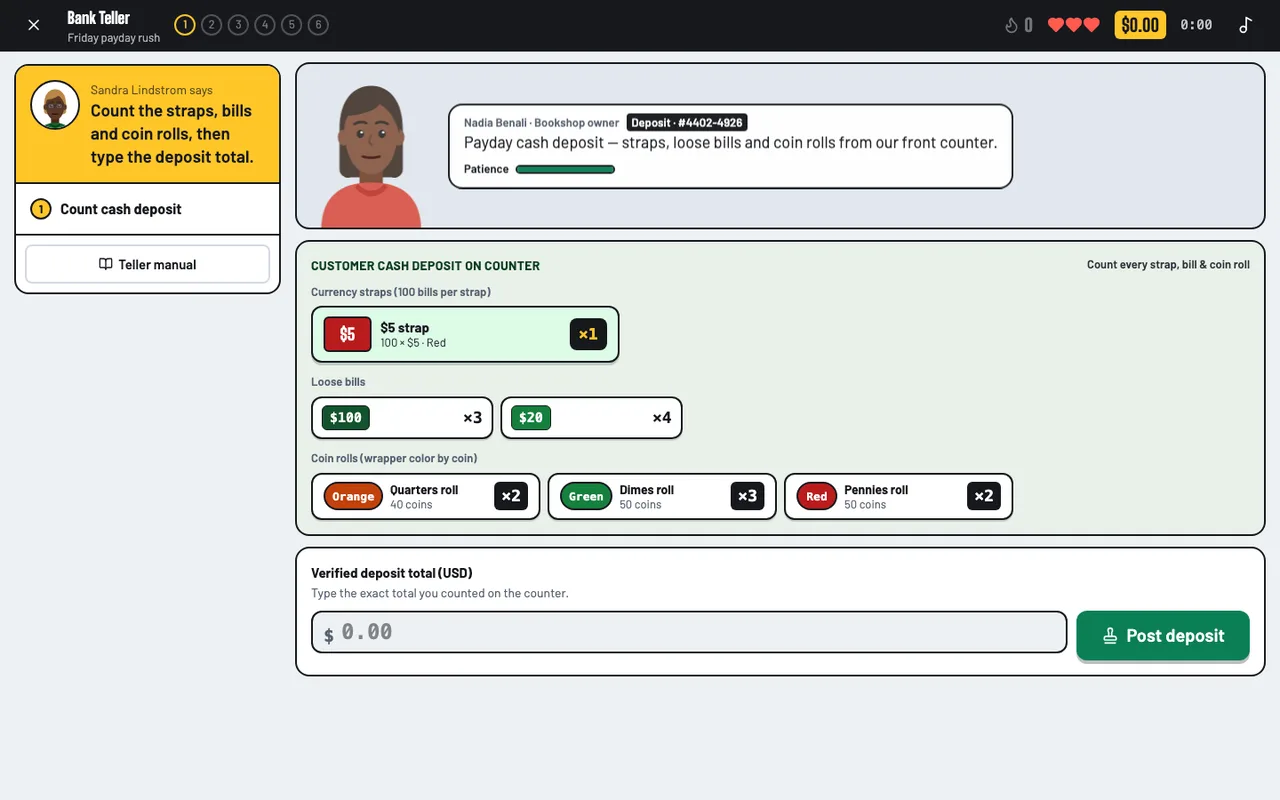
- Count cash deposits, 100-bill currency straps and color-coded coin rolls
- Inspect checks for valid dates, payees, legal written lines, maker signatures and back endorsements
- Verify government photo IDs and account signature cards before paying cash
- Start the Currency Transaction Report (CTR) the bank files on same-day cash of more than $10,000 (31 CFR 1010.311)
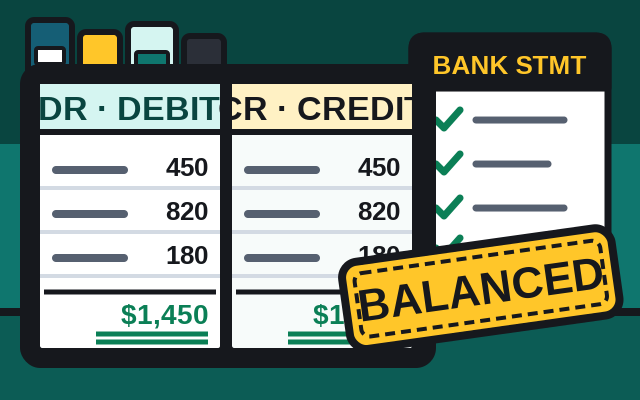
- Balance the teller cash drawer against the shift ledger at closing
What a shift at the teller window is like
A teller shift starts with verifying the opening cash drawer and organizing bills, coin rolls and straps. Morning hours often bring small-business deposits and change orders, followed by lunch and Friday payday rushes.
Between customers, tellers stay sharp on details: comparing faces to driver licenses, catching transposed account digits, explaining check hold notices calmly and watching for cash structuring attempts. At closing, balancing the cash drawer to the exact cent wraps up the day.
Skills that make a strong bank teller
You do not need advanced mathematics to excel as a teller — steady attention to detail, clean counting habits and calm communication matter far more. Knowing coin roll wrapper colors and standard currency strap values turns bulky deposits into quick mental checks.
Equally important is knowing when to pause and ask questions. Catching an unsigned check, noticing a $10,000.01 same-day cash total that needs a CTR or politely refusing an expired ID protects both the customer and the branch.
- Counting cash twice — once out of the drawer and once across the counter
- Recognizing coin roll colors (orange $10, green $5, blue $2, red $0.50)
- Following the 6-point check inspection habit front and back
- Keeping federal compliance calm, private and accurate
How to become a bank teller
According to O*NET OnLine (43-3071.00), tellers typically need a high school diploma or GED and receive short on-the-job training from their bank or credit union. Retail cash handling, customer service experience and clean accuracy on pre-employment hiring tests help applicants stand out.
Practicing free teller drills beforehand — including cash drawer balancing, check verification and assessment-style number matching — gives new applicants confidence before day one.
Bank teller pay and job outlook
According to O*NET OnLine (43-3071.00), median pay for tellers in 2025 was $43,030 a year, or $20.69 an hour, across 339,200 jobs nationwide.
While overall teller employment is projected to decline (-1% or lower) from 2025 to 2035 as digital banking grows, O*NET projects about 26,800 openings a year as tellers move into personal banker, loan officer or branch supervisor roles and have to be replaced.