What a bookkeeper does
A bookkeeper records a business's day-to-day financial activity so owners, lenders and accountants can trust the numbers. That starts with sorting receipts, sales summaries and payroll into the right accounts and posting balanced debits and credits to the general ledger.
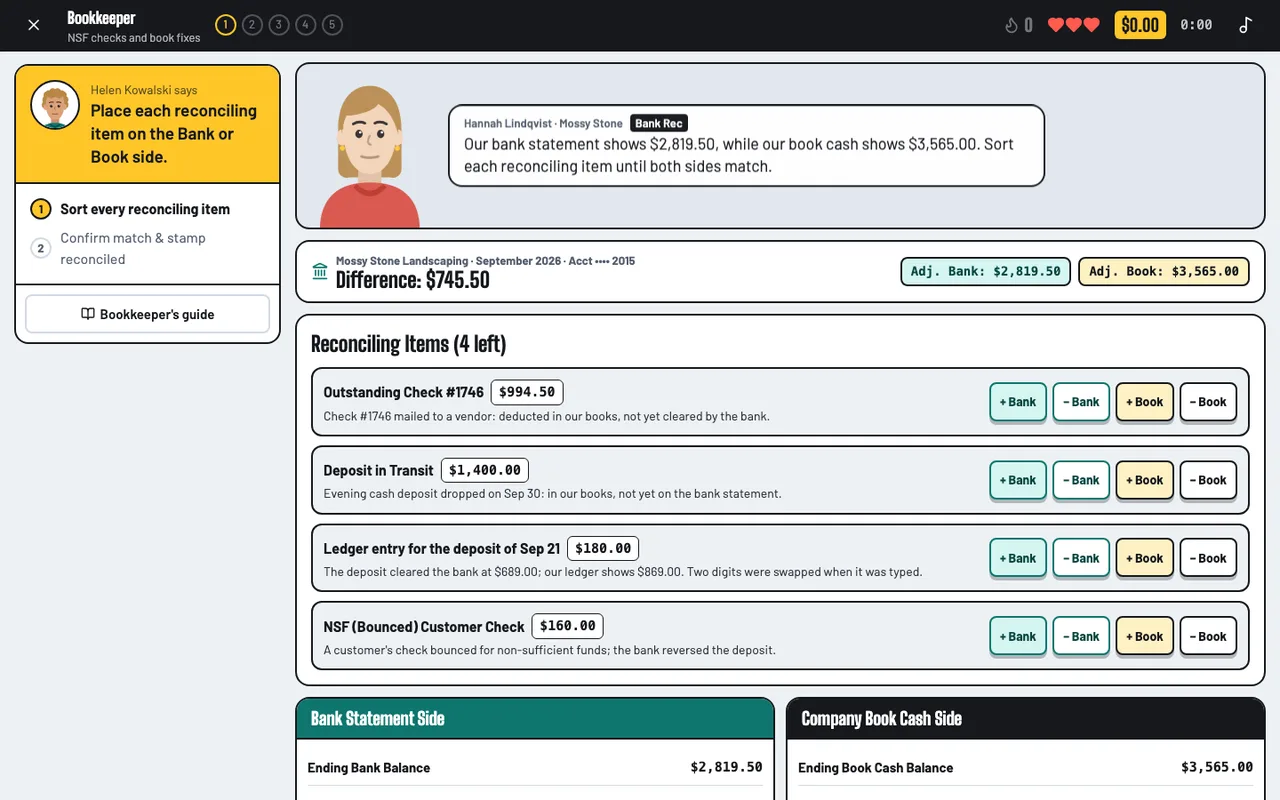
Beyond data entry, careful bookkeeping protects a company's cash. Bookkeepers track what customers owe in Accounts Receivable, run 3-way matches on vendor bills in Accounts Payable before releasing payments, and perform monthly bank reconciliations to catch bank fees, bounced checks and recording errors early.
- Classify transactions across Assets, Liabilities, Equity, Revenue and Expenses
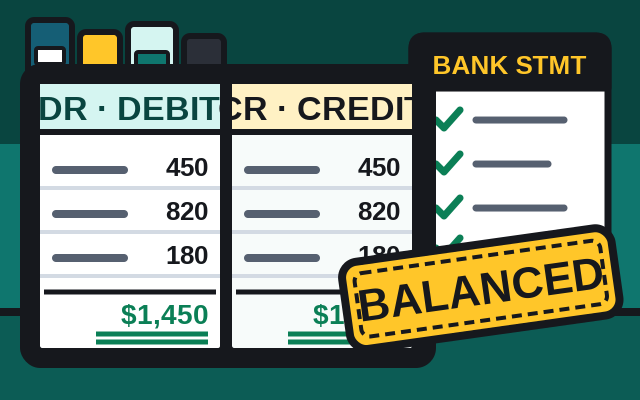
- Post balanced double-entry journal entries where Total Debits equal Total Credits
- Verify vendor invoices against Purchase Orders, Receiving Slips and payment logs
- Reconcile monthly checking statements against the company's cash ledger
- Keep organized supporting records for taxes, audits and month-end financial reports
What a typical week at the desk looks like
Most bookkeeping runs on a steady rhythm. Daily or weekly, you enter sales receipts, send customer invoices, match incoming supplier bills and log payments. That keeps cash flow clear so an owner knows what they can afford to order or hire.
At month-end close, the pace picks up. You reconcile every bank and credit card statement to the penny, record adjusting entries for prepaid expenses or bank fees, and review the trial balance so financial statements can be closed cleanly.
Skills that make a strong bookkeeper
You do not need advanced calculus to succeed in bookkeeping — accuracy, organization and solid double-entry habits matter far more. Knowing normal balances automatically lets you spot a reversed entry in seconds.
The best bookkeepers also bring healthy skepticism to Accounts Payable. Checking whether 40 boxes arrived when a vendor billed for 50, or spotting an invoice number that was already paid two weeks ago, saves small businesses thousands of dollars every year.
- Instant recall of DEAD CLIC normal balances (debits vs. credits)
- Careful document matching across POs, receiving logs and vendor bills
- Calm troubleshooting when a bank reconciliation is off by a few dollars
- Clean documentation habits so any auditor or accountant can trace every figure
Pay, job outlook and how to start
According to O*NET OnLine (43-3031, Bookkeeping, Accounting, and Auditing Clerks), median pay in 2025 was $50,670 a year, or $24.36 an hour, across 1,532,400 jobs nationwide.
While overall employment is projected to decline (-1% or lower) from 2025 to 2035 as software automates routine entry, O*NET still projects about 144,100 openings a year from retirements and career moves. Most clerks enter with some college or vocational training plus on-the-job training — and hands-on practice with debits, credits, accounts payable and bank reconciliation helps you stand out on pre-employment skills tests.