What an employee relations specialist actually does
An employee relations specialist is the fact-finder inside human resources: they look into workplace disputes, review proposed discipline, check attendance and performance records, and see that company policy and the law are applied fairly.
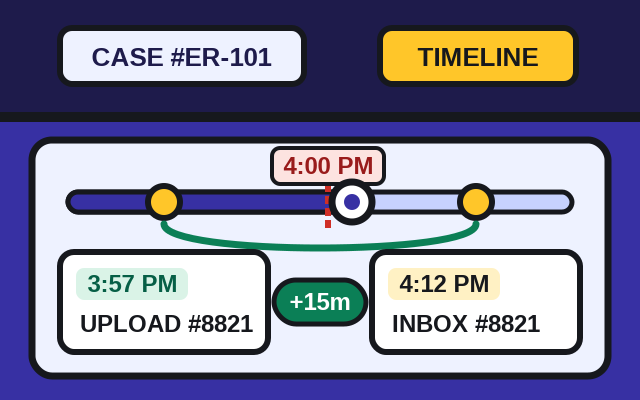
A dispute can have two honest sides. An employee uploads a handoff at 3:57 PM; a manager sees an empty inbox at 4:00 PM, because a mail server held the file for fifteen minutes. Good Employee Relations work rebuilds the timeline from the records before anyone's record takes a hit.
- Rebuild timelines from portals, inboxes, version histories and timeclocks
- Check that performance improvement plan (PIP) targets were applied as written
- Talk to the people who were there, and hold a case when a record is still missing
- Keep FMLA leave out of attendance points, and keep medical records private
- Check layoff lists and the years of service on severance packets
What a shift at the ER desk feels like
The week starts with handoff disputes and file mix-ups: which version of a forecast was on the shared drive at noon, and which one the manager opened. Midweek brings moved PIP targets and blank badge logs that one dated IT ticket can fill.
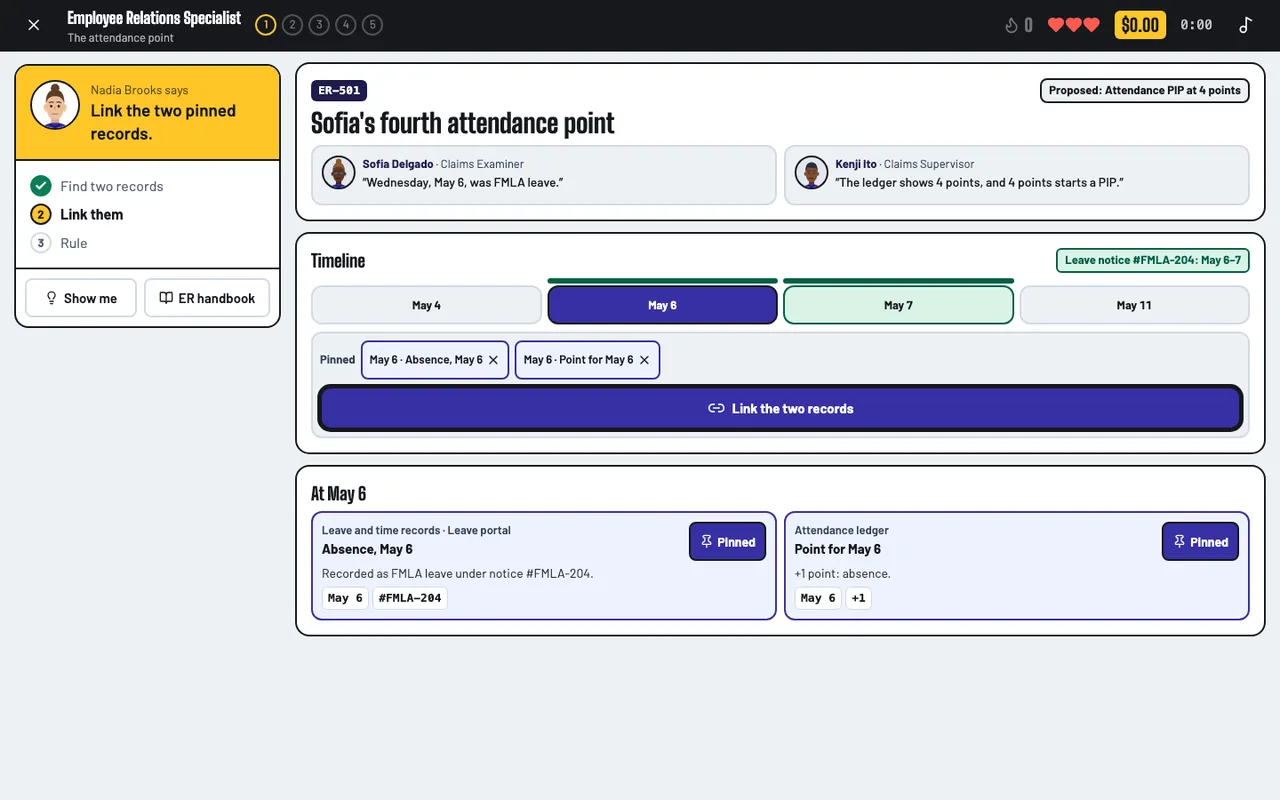
By Friday the stakes rise: an attendance PIP that counted a day of FMLA leave, a layoff list that falls hard on older workers, and a transfer that erased three years from a severance packet.
Separating company policy from federal law
A habit that matters in HR investigation work is telling the employer's own rules from the law. A 4:00 PM upload cutoff, a 30-day PIP or a two-weeks-per-year severance formula is an employer's written policy; the federal Fair Labor Standards Act (FLSA) does not require severance pay at all.
Some rules are law. Under 29 CFR 825.220(c), FMLA leave cannot be counted under a no-fault attendance policy or used against the employee in discipline. Under 29 CFR 825.500(g), FMLA medical records are kept confidential and apart from personnel files. The ADEA protects workers 40 and older at employers with 20 or more employees and in state and local government, and EEOC's layoff checklist, which is guidance, asks employers to compare how a layoff falls on each group.
- Check both systems before upholding a late mark or a quality strike
- Never count FMLA leave, whole days or hours, toward attendance points
- Tell a manager only the work restrictions, never the diagnosis
- Compare a layoff list with the whole group, older workers included
Pay, education, and job outlook
O*NET has no occupation of its own for employee relations specialists; the closest is human resources specialists (13-1071.00). In O*NET's survey of that occupation, a bachelor's degree is the most common education (47%). Certifications such as SHRM-CP or PHR are offered by professional bodies.
According to O*NET, Human Resources Specialists earned a median wage of $75,940 a year ($36.51 an hour) in 2025, across 939,700 U.S. jobs. Employment is projected to grow faster than average (5% to 6%) from 2025 to 2035, with about 73,700 openings each year.