What a cashier does
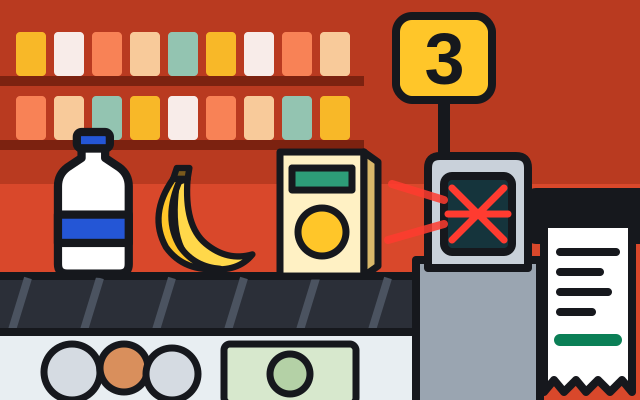
A cashier rings up what people buy and takes the payment. In a grocery store that means scanning packages, weighing loose fruit and vegetables, taking cash and cards, giving change and a receipt, and bagging.
The scanning is the easy part. The work is in what the scanner cannot decide: whether a coupon still counts, whether an ID is good, whether a bill is real, and how to say no to somebody without making them feel small.
- Scan items, and type the code for anything without a barcode
- Take cash, cards, checks, vouchers and food benefits
- Give the right change and a receipt
- Handle returns, exchanges and questions about prices
- Count the money in the drawer at the start and end of a shift
What a shift is like
You count your drawer, log in to the register and open your lane. Then it comes in waves: quiet mid-morning, a rush at lunch and after work, and a long line on Saturdays.
You stand for most of it and repeat the same small movements, so good shoes matter. Most customers are friendly for the minute you have them. Some are tired, and a calm cashier is often the only thing between a small problem and a big one.
At the end you count the drawer again. It should hold what it started with plus what the register says you took in cash.
Skills that make a good cashier
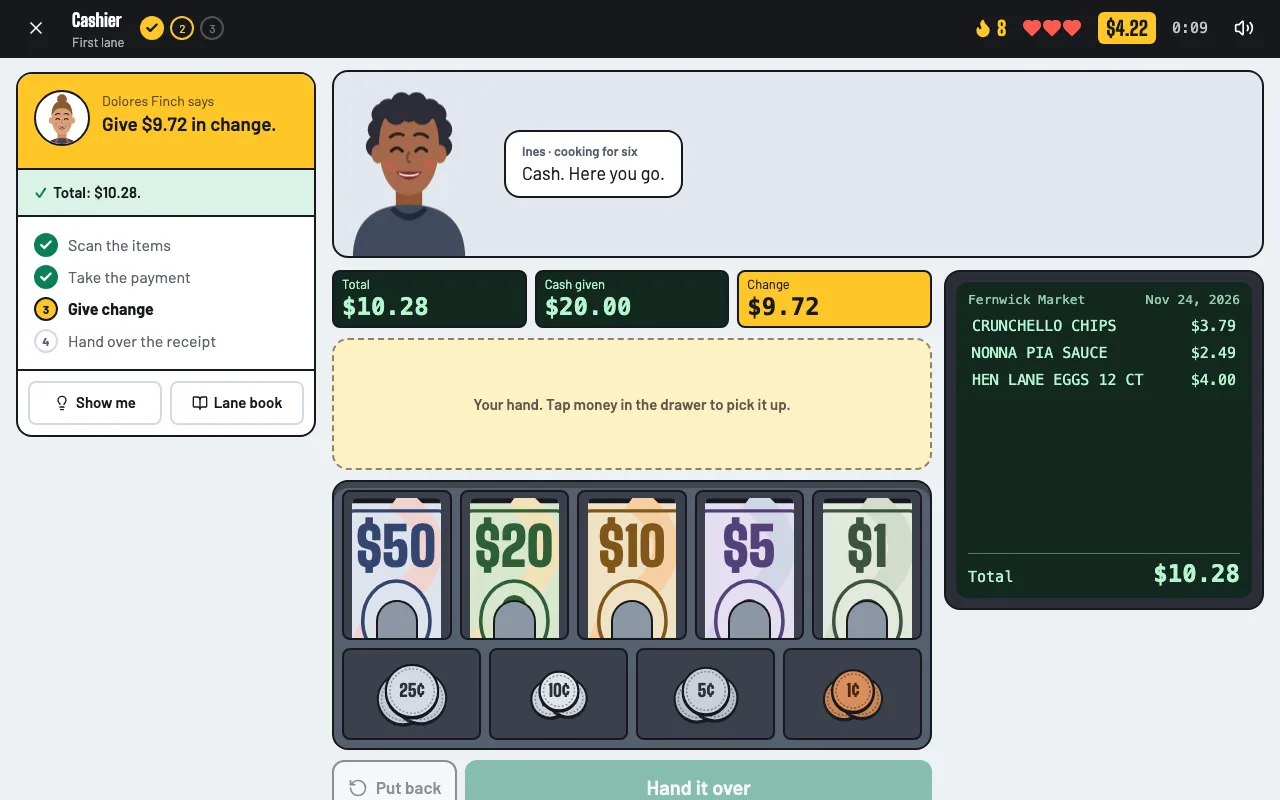
Counting money without hurry comes first. You do not need to be good at math: cashiers count up from the total, so there is nothing to subtract. You can practice that here until it is automatic.
Next is attention: hearing the double beep, reading the date on a card, seeing the case of water under the cart. And the last is manners under pressure, which is what managers notice.
- Counting change up, fast and without mistakes
- Remembering the produce codes people buy most
- Reading dates: coupons, IDs, sale signs
- Staying kind with a line waiting
How to get hired
According to the U.S. Bureau of Labor Statistics, cashiers need no formal education and no experience. Training happens on the job and may last up to a few weeks. Some employers prefer a high school diploma.
Say in the interview when you can work, because schedules often include evenings, weekends and holidays. Then show you can handle money and people: tell them how you would count back change from a twenty, and what you would do when a customer says the price is wrong.
What cashiers earn
The median pay was $15.81 an hour, or $32,880 a year, in 2025, according to the U.S. Bureau of Labor Statistics. Half of all cashiers earned more than that and half earned less.
The number of cashier jobs is expected to shrink by 6 percent from 2025 to 2035. There are still about 521,300 openings every year, because most openings come from people who leave and have to be replaced. For many it is the first job, and the one where they learn to handle money and strangers.