What a 911 dispatcher does
A 911 dispatcher, also called a public safety telecommunicator, is the first person you reach when you call for help. They find out where you are and what is wrong, decide how urgent it is, send police, fire or ambulance, and stay with you until help is there.
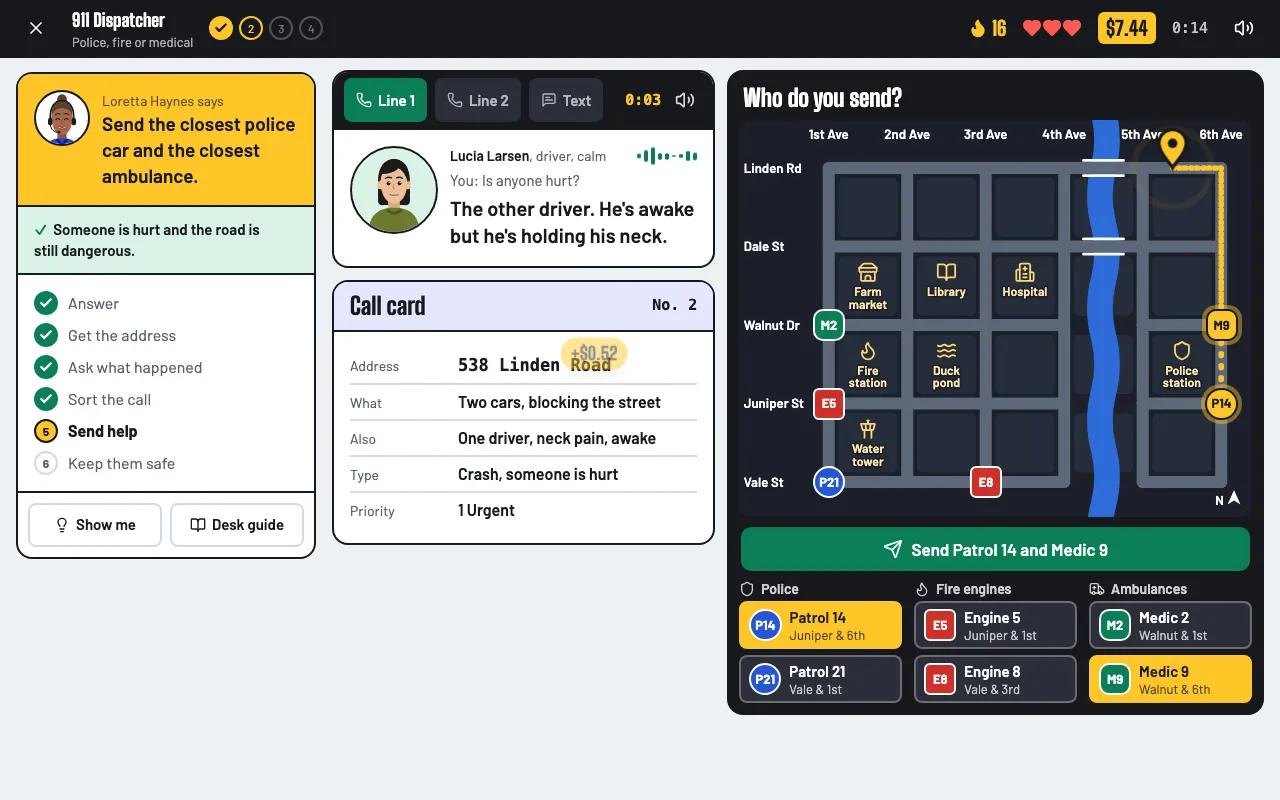
Every call is written down while it happens. At the same time the crews talk on the radio, and the dispatcher keeps track of where each one is and who is free.
- Answer 911 and non-emergency calls, and texts
- Find out where the caller is and what is wrong
- Decide how urgent it is and which units to send
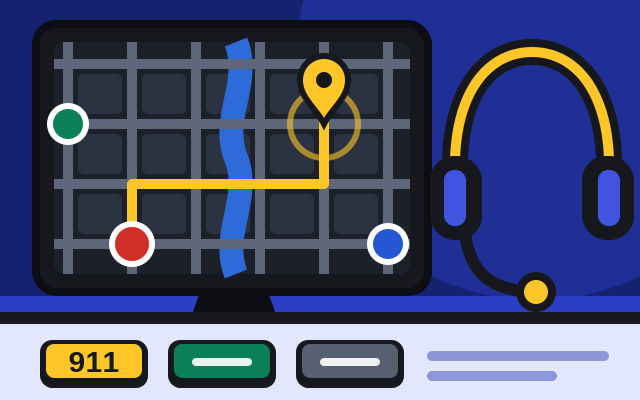
- Track the units on a map and over the radio
- Tell the caller how to stay safe until help arrives
- Type a record of every call
Why the address comes first
The national call standard of NENA, the 9-1-1 association, says that agencies shall ask for and verify the caller's location first. If the line drops after ten seconds, help can still drive to an address. It cannot drive to a story.
The same standard sets the pace: 90 percent of 911 calls are to be answered within 15 seconds, and a call with somebody in danger should be ready to dispatch within 60 seconds. In the game you feel that clock, with a supervisor next to you who explains every step.
What a shift feels like
Long quiet stretches, then everything at once. A caller who shouts, a caller who cannot speak, a lost hiker, a dog on a roof, and a crew on the radio that needs an answer now. A good dispatcher does one thing at a time, in the right order, with a steady voice.
The work is done in shifts around the clock, with several screens and a headset. You hear how calls begin and often do not learn how they end. In this game you do, and they end well when you work well.
- Listen to two people at once and write down what both say
- Type numbers and names without a mistake
- Know the map: streets, bridges, landmarks
- Stay kind and calm when somebody is not
How to get hired
Most centers ask for a high school diploma or equivalent and no related experience. You usually take an exam and a typing test, and some centers add a background check, and lie detector, drug, hearing and vision tests.
Training happens on the job. How long it takes depends on the state: some require 40 hours or more, some ask for more training every two or three years. The first year is often a trial period. Many states and places ask for a certificate, such as the one for emergency medical dispatchers, and a second language helps.
Pay, jobs, and what this game is not
The median pay was $53,040 a year, or $25.50 an hour, in 2025. There were 105,600 jobs, and about 9,000 openings are expected each year until 2035, mostly to replace people who move on. The number of jobs is expected to grow by 4 percent, about as fast as average. (Bureau of Labor Statistics and O*NET)
This is a game, not training. Real centers follow their own protocols, and the advice in the game is only the general kind that public safety pages give everybody. In a real emergency, call 911. If you cannot speak, text 911 where it is available.