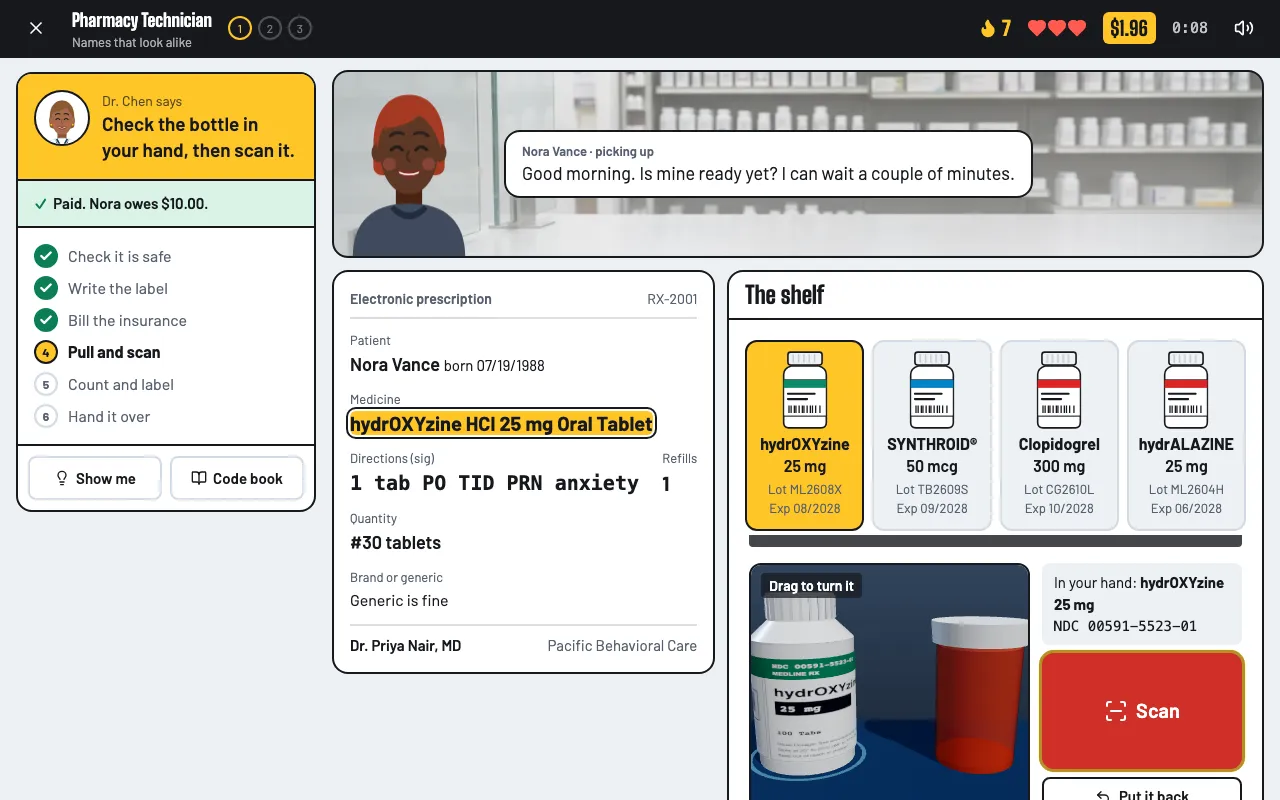
What does a pharmacy technician do?
A pharmacy technician does the hands-on work of filling prescriptions under a pharmacist. They take in the prescription, check that nothing is missing, type it into the computer, send the claim to the insurance, count or measure the medicine, label it, and ring it up.
What they do not do is just as important. Questions about how a medicine works, side effects or whether it is safe to crush a tablet go to the pharmacist. In the game, answering one of those yourself costs you a heart.
What a shift is like
Most of the day is a queue. Electronic prescriptions arrive on the screen, people come to the window, the phone rings, and insurance plans refuse claims for reasons you learn to read. Between customers you check expiry dates and put away stock.
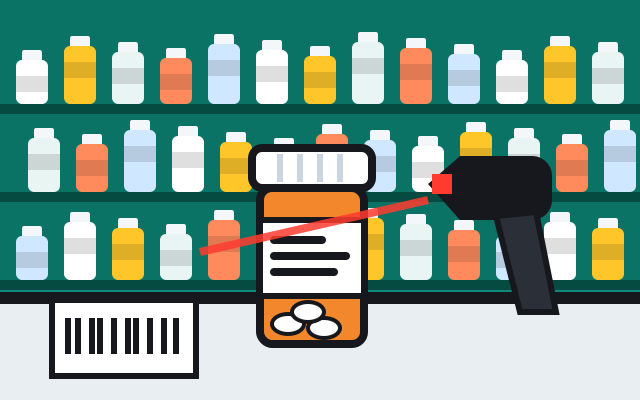
The part nobody sees is the checking. A technician reads the same name three times, because two names that differ by three letters can be very different medicines. That is why this simulator makes you scan, read and stop.
Skills you practice here
Each training shift adds one skill and keeps the old ones.
- Reading sig codes and writing a label in plain words
- Days' supply for tablets, insulin, eye drops and inhalers
- Insurance refusals 70, 75 and 79, and brand or generic (DAW) codes
- Allergies, interactions, duplicate medicines and children's doses
- DEA numbers, controlled drug schedules and refill limits
- Privacy at the counter and the limits on cold medicine
- Look-alike names, NDC scanning, expiry dates and recalls
How to become a pharmacy technician
Most start with a high school diploma and learn on the job, usually in less than a year. Some take a program at a community college or vocational school. Most states regulate the job, and some states and employers ask for certification.
The two national exams are the PTCE from PTCB and the ExCPT from NHA. PTCB's has 90 questions in 1 hour and 50 minutes and costs $129. You qualify with a recognized training program or 500 hours of work.