What a medical scribe does
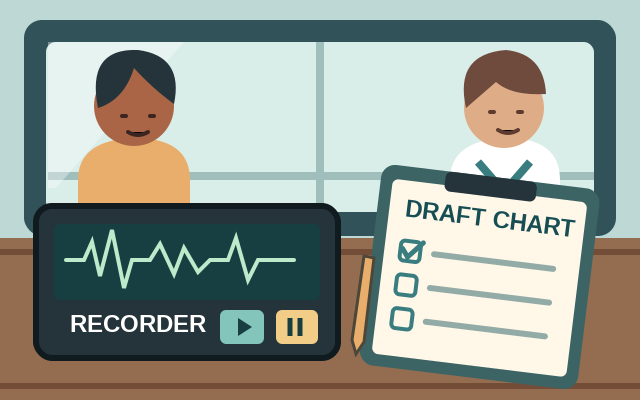
Medical scribes assist practitioners with documenting encounters. The American College of Emergency Physicians describes a scribe who goes into the exam room with the practitioner and documents the practitioner-patient encounter, and who does not act independently; the practitioner reviews and signs the note. The Joint Commission describes documentation assistant roles as defined by the organization's job description and the person's scope.
Documentation assistance may involve entering information into an electronic medical record for practitioner review. In the Alder booth, you draft a clearly attributed record and hand it back for review, never diagnose, order or authenticate care.
Listening and charting practice
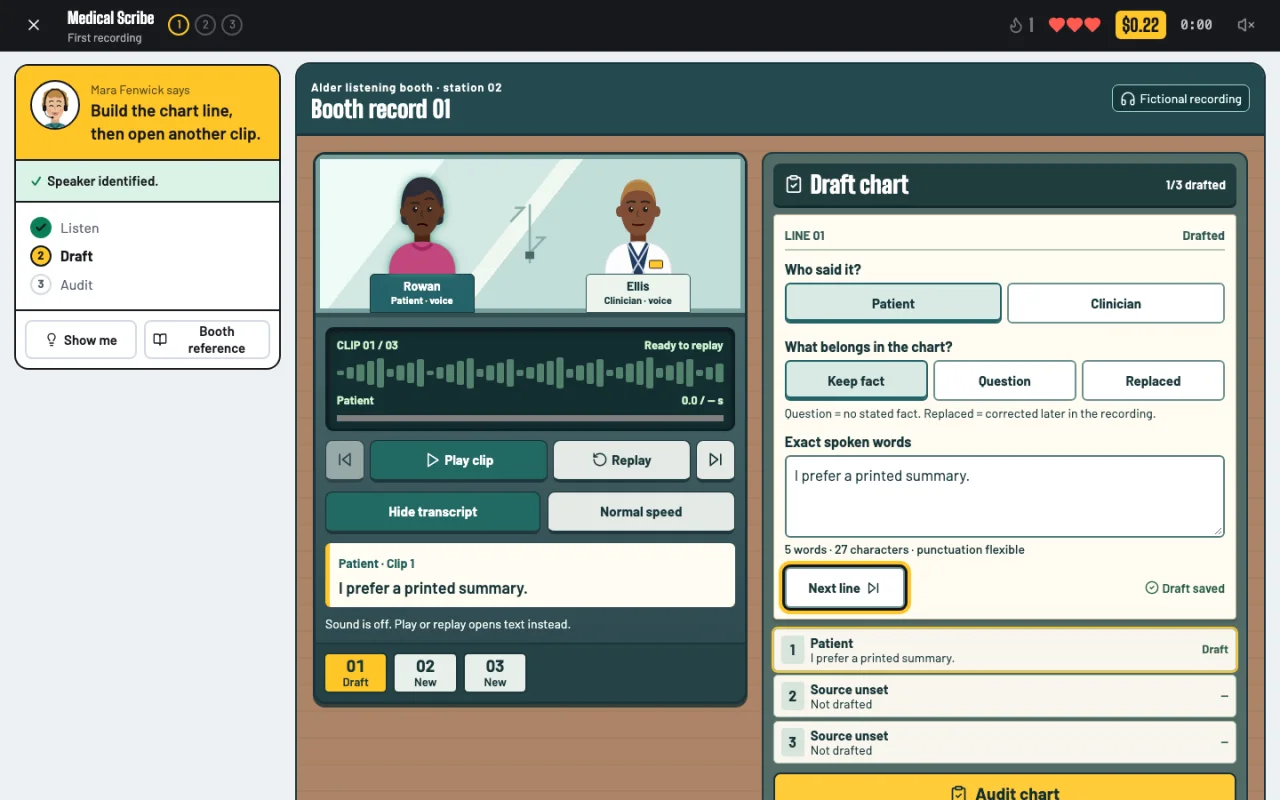
The simulation uses short fictional clinic visits, not real encounters: what the patient reports, what the clinician finds, and the plan. A line can be a statement, a question or a statement explicitly replaced later. Listen through first, or chart clip by clip and replay to make corrections. The transcript has the same words as the recording but does not say who spoke: that is for your ear. With sound off it names the speaker, and those lines earn no pay.
The fact chart here uses verbatim lines as a deliberately limited training exercise. Actual documentation varies by workplace; a clinician's review and local procedures matter. The typing test is a separate transcription drill for speed and accuracy.
Pay and prospects
O*NET includes medical scribe among the reported job titles in the broader medical transcriptionists occupation (31-9094). The figures below are for that broader occupation, not a separate estimate of scribe pay or jobs. BLS reports that medical transcriptionists typically complete a postsecondary certificate; documentation assistant qualifications vary by role and employer.