Skip to content

Barista game simulator: espresso bar and coffee shop

Run a live espresso bar in this free barista game simulator: pull shots, steam milk textures, nail syrup pumps and handle real allergies.

A free barista simulator game online: 8 shifts that start easy, a new one every day, and an endless one. No download, no sign-up, on a phone or a computer.

Clock in: first shift

4 minutes. Every step explained. No sign-up.

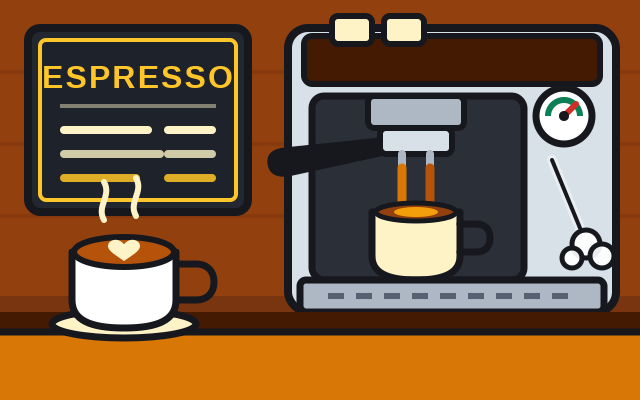
Wrenfield espresso bar: a chrome espresso machine pours golden crema into a ceramic cup beside a menu chalkboard reading ESPRESSO
I'm Tessa Morales. I'll show you how it's done.

Your schedule

8 shifts. Each adds one skill and keeps the old ones. Start anywhere; the marked one is next for you.

What you will do

A shift in the barista simulator
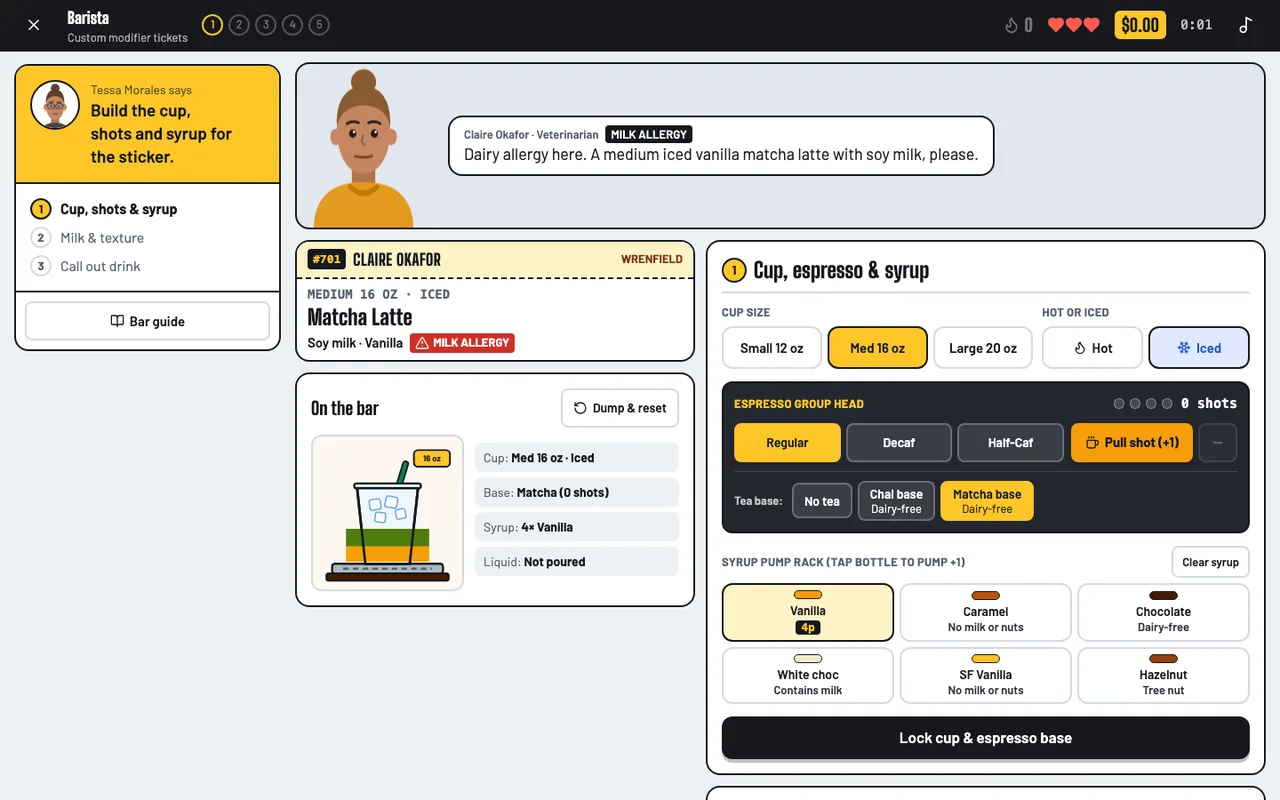
  • Pull dialed-in espresso shots

    Switch between regular, decaf, half-caf and tea bases while watching every cup fill live on the drip tray.

  • Master cup sizes and syrups

    Nail Small (1/3), Medium (2/4), and Large (3/5) shot and pump counts across lattes, mochas, and specialty tickets.

  • Steam exact milk textures

    Tell velvety flat white microfoam apart from thick cappuccino foam, foam dollops, and cold iced pours.

  • Protect allergy & decaf guests

    Keep dairy milk, whip and milk sauces off milk-allergy orders and almond milk and hazelnut off tree-nut ones, read the label of everything that goes in, and grab the clean allergen pitcher.

Barista practice tools

Drills, calculators and reference lists for the skills of this job.

What a barista does

A barista prepares and serves espresso drinks, brewed coffee, tea lattes, and cold beverages in a coffee shop. Behind the counter, the job blends craft and speed: dialing in the espresso grinder, pulling consistent shots, steaming milk to smooth microfoam, and keeping a spotless bar.

Good baristas also read every order sticker carefully. One missed word on a cup (regular shots for a guest who needs decaf, whipped cream or a milk sauce on a milk-allergy mocha, almond milk on a tree-nut allergy order) can make a guest ill.

  • Pull single, double, triple, decaf, and half-caf espresso shots
  • Steam whole, oat, almond, and soy milks to the right temperature and foam texture
  • Build lattes, cappuccinos, flat whites, cortados, Americanos, mochas, and tea lattes
  • Follow allergen cross-contact procedures with dedicated clean pitchers and purged wands
  • Take accurate register orders and keep drinks moving smoothly during rush hours

What a coffee shop shift is like

Opening baristas arrive before sunrise to warm up the espresso machine, weigh morning test shots around a 1:2 brew ratio, stock milk fridges, and set up syrup pumps and sanitized cloths. Morning commuter rush hits hardest between 7 a.m. and 10 a.m., when orders stack six tickets deep on the rail.

Between waves, baristas restock cups and lids, wipe down steam wands and counters, check milk temperatures, and prep tea concentrates. You spend most of the shift on your feet moving in a tight rhythm between grinder, group head, steam wand, and hand-off counter.

Espresso drinks, milk steaming and allergen safety

Almost every specialty cafe drink comes down to three variables: how many shots of espresso (or tea concentrate) go in, how much milk or water fills the cup, and how much air you stretch into the foam. Silky microfoam makes a latte or flat white velvety; deep dry foam makes a classic cappuccino; an Americano skips milk for hot or cold water.

Every café sets its own milk steaming temperatures; in this game the house standard is 140°F to 155°F, kids temp about 120°F and extra hot about 165°F, and milk scorches above about 175°F. For guests with a milk or tree-nut allergy, baristas leave out the milk, syrup, sauce or whipped cream that holds it, read the label of everything that goes in, wipe and purge the steam wand, and steam fresh milk in a clean allergen pitcher.

How to get hired as a barista

The U.S. Bureau of Labor Statistics lists no formal educational credential for food and beverage serving workers, the group that includes baristas, and short-term on-the-job training. Cafes look for reliable teammates who stay calm during morning lines, keep a clean station, and remember drink recipes accurately.

Walking into an interview already knowing the difference between a latte, cappuccino, flat white, cortado, and traditional macchiato — plus basic milk steaming temperatures and allergen safety — shows managers you can pick up their house recipes fast.

What baristas earn and job outlook

O*NET OnLine gives pay and job counts for baristas only as part of the larger group of fast food and counter workers: a 2025 median wage of $31,200 a year, or $15.00 an hour, and 3,855,900 jobs nationwide. Many cafe workers also earn tips on top of hourly pay, depending on the shop.

For fast food and counter workers as a whole, employment is projected to grow faster than average (5% to 6%) from 2025 to 2035, with about 827,400 openings a year.
Barista simulator: questions

Is this barista game simulator free to play?

Yes. You can play all eight training shifts, the daily morning bar, the endless coffee rush, and all three practice drills free in your browser with no sign-up or download.

Will this coffee shop simulator help me prepare for a real barista job?

It helps you build muscle memory for core drink architecture (latte, cappuccino, flat white, cortado, macchiato, Americano, mocha, chai, and matcha), standard shot and syrup scaling, milk steaming temperatures, and food allergen safety. Every cafe has its own cup sizes and equipment, which you will learn on the job.

What causes a critical mistake on the espresso bar?

Four safety mistakes cost a heart: dairy milk, whipped cream or a sauce made with milk on a milk-allergy order; almond milk or hazelnut syrup on a tree-nut allergy order; regular or half-caf espresso for a guest who needs decaf for a health reason; and skipping the clean allergen pitcher on a hot allergy drink. Other slips, like scorching the milk, are fixed on the spot.

How many shots go into a flat white or cortado?

In our Wrenfield house standard, a flat white, cortado, and traditional macchiato always get 2 espresso shots, even in a Small cup. Lattes, cappuccinos, mochas, and Americanos go by size: Small 1 shot, Medium 2, Large 3. Other cafés may differ.

What is the best milk steaming temperature?

Every café sets its own. In this game the house standard is 140°F to 155°F, kids drinks about 120°F (115°F to 130°F, still with a tight lid), and extra hot about 165°F; above about 175°F the milk scorches.

Do I need certification or experience to work as a barista?

The U.S. Bureau of Labor Statistics lists no formal educational credential for food and beverage serving workers, with short-term training on the job. Depending on your city or state, cafes may also ask for a local food handler card.

Try another job