Skip to content

Medical receptionist simulator game: front desk

Run a medical front desk: check patients in, read insurance cards, book clinic appointments and protect HIPAA privacy.

A free medical receptionist simulator game online: 8 shifts that start easy, a new one every day, and an endless one. No download, no sign-up, on a phone or a computer.

Clock in: first shift

4 minutes. Every step explained. No sign-up.

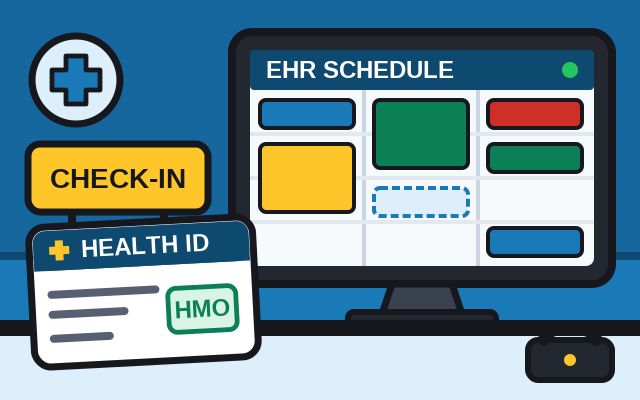
Medical receptionist front desk: an EHR appointment calendar monitor, a health insurance card with a medical cross, and a Check-In sign on the counter
I'm Priya Nair. I'll show you how it's done.

Your schedule

8 shifts. Each adds one skill and keeps the old ones. Start anywhere; the marked one is next for you.

What you will do

A shift in the medical receptionist simulator
  • Verify two patient identifiers

    Search the clinic's computer charts (EHR) and match both full name and date of birth, even when two patients share the exact same name.

  • Inspect health insurance cards

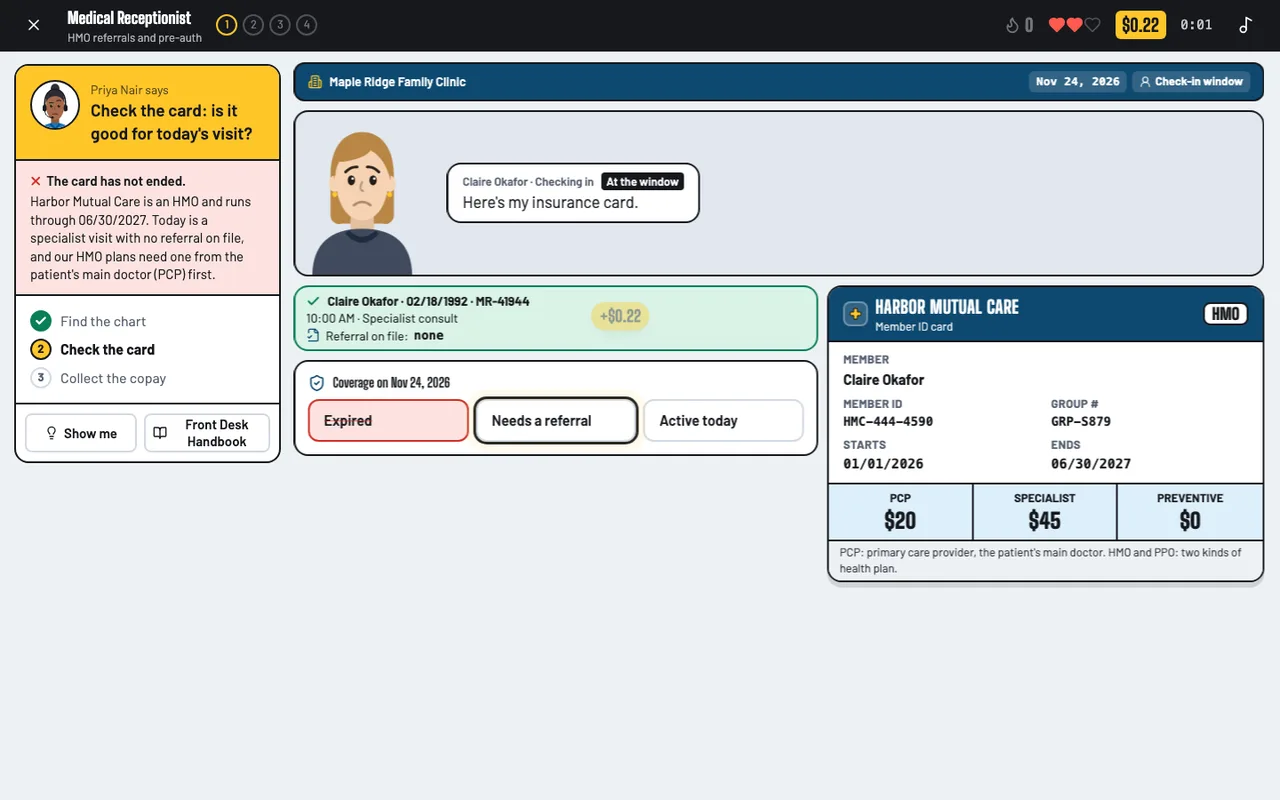
    Check the dates, tell an HMO from a PPO, look for the referral, and collect the right copay for the visit.

  • Book a live clinic calendar

    Match callers to the right provider, a 15- or 30-minute slot and the morning fasting window, and tell emergency callers to call 911.

  • Protect patient privacy

    Answer spouses, parents, employers and neighbors as HIPAA allows and as the clinic's stricter policy says, and keep papers out of view.

Medical Receptionist practice tools

Drills, calculators and reference lists for the skills of this job.

What a medical receptionist does

A medical receptionist—also called a medical secretary or patient access representative—runs the front desk of a clinic, doctor's office, or outpatient center. You are the first person patients see when they walk in and the first voice they hear when they call.

Behind a calm greeting sits careful work: matching two patient identifiers in the electronic health record (EHR), checking insurance coverage and HMO referrals, collecting copays, scheduling across several providers, and keeping protected health information (PHI) private under HIPAA.

  • Greet arriving patients and match both full name and date of birth in the EHR
  • Check insurance cards for dates, HMO referrals and the right copay
  • Schedule new patients, follow-ups, same-day visits and fasting lab draws without double-booking
  • Listen for emergency signs on the phone and tell those callers to call 911
  • Keep patients' information private at the counter, on the phone and on the sign-in sheet

What a shift at the medical front desk is like

Clinic mornings start fast. At 8:00 a.m., fasting lab patients arrive at the check-in window while Line 1 and Line 2 ring with parents asking for same-day sick visits and callers requesting refills or records.

The pace settles into steady check-ins and checkout scheduling mid-morning, then surges again after lunch. Staying organized means following the same safe order with every patient: never skipping the birth date check or guessing a referral rule, even when a line forms.

Skills that make a strong patient access receptionist

Detail accuracy matters more than typing speed alone. Catching a transposed birth date (03/08 vs. 08/03), noticing an expired insurance term date, or spotting an HMO specialist visit with no referral saves patients from billing surprises and keeps clinical charts safe.

Just as important is steady communication under pressure: politely telling a caller that test results come from the care team, or calmly telling a caller with chest pain to hang up and call 911 now, not to drive in.

  • Two-identifier patient lookup without chart mix-ups
  • Reading HMO and PPO cards, copays and dates
  • Matching providers, appointment lengths and fasting lab windows
  • Knowing what the HIPAA Privacy Rule allows, and what is the clinic's own policy

How to start, pay, and job outlook

O*NET OnLine (43-6013, medical secretaries and administrative assistants) says the job usually requires a high school diploma or GED, with training on the job in the clinic's scheduling and EHR software. Asked what new hires need, 48% of respondents said a high school diploma, 26% an associate's degree and 20% a post-secondary certificate.

In 2025, median pay for medical secretaries and administrative assistants was $45,930 a year ($22.08 an hour), with 979,000 jobs nationwide. Employment is projected to grow faster than average (5% to 6%) from 2025 to 2035, generating about 89,200 job openings each year.
Medical Receptionist simulator: questions

Is this medical receptionist simulator free to play?

Yes. Every shift and standalone practice drill runs free in your browser on a phone or computer, with no download and no account required. Your stars and progress stay on your own device.

Will this help me prepare for a medical front desk or patient access interview?

It lets you practice the work such interviews ask about: two-identifier patient lookup, reading HMO and PPO cards, matching appointment lengths on a provider grid, knowing when a caller must call 911, and what HIPAA allows at the desk.

Why do medical offices ask for both full name and date of birth?

Two identifiers keep the wrong chart from being opened when two patients share a name. HIPAA requires a clinic to verify who is asking before it shares health information, but sets no number of identifiers. Clinics that follow the Joint Commission's patient-safety goals ask for at least two, such as full name and date of birth; ours does too.

Do I need a medical degree or license to become a medical receptionist?

No. O*NET OnLine says the job usually requires a high school diploma or GED, with training on the job. Receptionists handle check-in, scheduling, insurance and clerical work, never diagnosis or medical advice.

Are the patients, clinics, and insurance cards in this game real?

No. Every patient name, birth date, clinic, provider, health plan name, and member ID is completely invented for safe practice.

Try another job