Medical scheduling practice: clinic calendar drill
Medical scheduling practice on a clinic calendar: match each caller to the right provider and slot length, keep fasting draws in the morning, and send emergencies to 911.
“Hi, I just moved to town and want to establish care with Dr. Patel for my first adult annual physical.”
For practice only. Every patient, clinic and insurance card is invented. Never use this game for real medical advice or triage.
Use it on a real shift
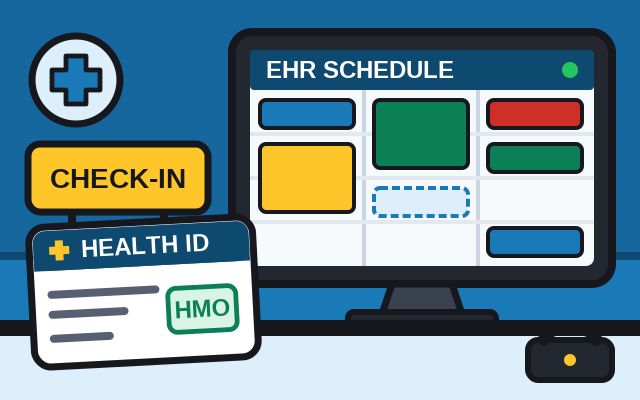
Medical Receptionist simulator: Run a medical front desk: check patients in, read insurance cards, book clinic appointments and protect HIPAA privacy.
How clinic scheduling works
Strong medical scheduling keeps patient access smooth, protects exam room flow, and prevents double-booking across providers.
- 1
Listen for emergencies first
Before opening the calendar, listen for emergency signs such as chest pain, stroke signs or severe trouble breathing. Those callers are told to call 911.
- 2
Match the right provider
At our clinic, adult physicals and follow-ups go to primary care, same-day sick visits and children to the same-day column, and blood draws to the lab desk.
- 3
Match the visit length
Our clinic books 30 minutes for new patients, physicals and complex visits, and 15 minutes for quick follow-ups, so long slots stay free.
- 4
Never double-book
Check that the slot is open before you confirm a time. A double-booked slot delays every patient after it.
Provider matching and appointment lengths
| Visit type | Clinic provider | Slot length | Why |
|---|---|---|---|
| New patient / annual physical | Dr. Meera Patel (Primary Care) | 30 minutes | Needs full intake, history review, and preventive exam. |
| Routine adult follow-up | Dr. Meera Patel (Primary Care) | 15 minutes | Blood pressure check, medication review, or single stable issue. |
| Same-day minor illness or pediatric visit | NP Jordan Brooks (Urgent & Peds) | 15 minutes | Earaches, sore throat, mild ankle sprain, or stable rash. |
| Complex same-day urgent workup | NP Jordan Brooks (Urgent & Peds) | 30 minutes | Multiple acute complaints or asthma inhaler plan review. |
| Fasting blood draw (cholesterol, glucose) | Clinic Lab Desk | 15 minutes (before 10:00 AM) | Patients are usually asked not to eat for 9 to 12 hours, so the draw is booked early. |
| Non-fasting swab or routine blood count | Clinic Lab Desk | 15 minutes (midday / afternoon) | Leaves early morning fasting slots open for fasting patients. |
Clinic providers and emergency calls
Receptionists never diagnose, but knowing the emergency signs lets them send a caller to 911 at once.
Clinic schedule columns
- Dr. Meera Patel (Primary Care (Adult)): Adult annual physicals (30 min), new patients (30 min), and routine follow-ups (15 min).
- NP Jordan Brooks (Same-Day Urgent & Pediatrics): Same-day sick visits, minor injuries, and pediatric patients (15 min standard, 30 min complex).
- Clinic Lab Desk (Blood Draw & Swabs): Fasting blood draws before 10:00 AM (15 min). Non-fasting swabs and draws all day.
When to tell a caller to call 911
- Chest pain or pressure, or pain spreading to the arm, back, neck or jaw, with or without a cold sweat.
- A face that suddenly droops, an arm that drifts down, slurred speech (stroke signs).
- Severe trouble breathing, or a swelling, tight throat or wheezing after a food or a sting.
- Bleeding that will not stop, or a person who faints and does not wake up.
Tell the caller to hang up and call 911 now, and not to drive themselves or the patient to the hospital: an ambulance crew starts treatment on the way.
Questions people ask
Why do new patients and physicals get 30-minute slots?
At the clinic in this game, a new patient visit or a physical takes a full history and exam, so it gets 30 minutes; a follow-up gets 15. Clinics set their own lengths. Squeezing a long visit into a short slot backs up the provider for the rest of the morning.
Why are fasting blood draws booked early in the morning?
Patients are usually asked not to eat for 9 to 12 hours before a fasting cholesterol test, and the provider says whether fasting is needed. Booking the draw early in the morning means they fast overnight, not through the day.
What should a receptionist do when a caller describes chest pain or stroke signs?
Never book a clinic visit for emergency signs such as chest pain or pressure, a face that suddenly droops, slurred speech or severe trouble breathing. Tell the caller to hang up and call 911 now, and not to drive themselves or the patient to the hospital: an ambulance crew starts treatment on the way. The CDC and the American Heart Association both say to call 911.
Where this comes from
- CDC, signs and symptoms of stroke
- American Heart Association, warning signs of a heart attack
- MedlinePlus, recognizing medical emergencies
- MedlinePlus, anaphylaxis
- MedlinePlus, cholesterol levels (fasting before the test)
- O*NET OnLine, receptionists and information clerks (43-4171.00)
Last changed . Rules change, and states and employers add their own: at work, follow theirs. Found a mistake? How we check, and how to tell us.