Normal vital signs chart and EMT monitor quiz
Review normal adult ranges with this normal vital signs chart and live monitor quiz. Spot tachycardia, bradycardia, hypoxia and hypotension at a glance on an EMS screen.
Live EMS Monitor Quiz
54-year-old adult resting on the stretcher, routine check.
For practice only. Not affiliated with NREMT and never medical advice or training. In a real emergency call 911.
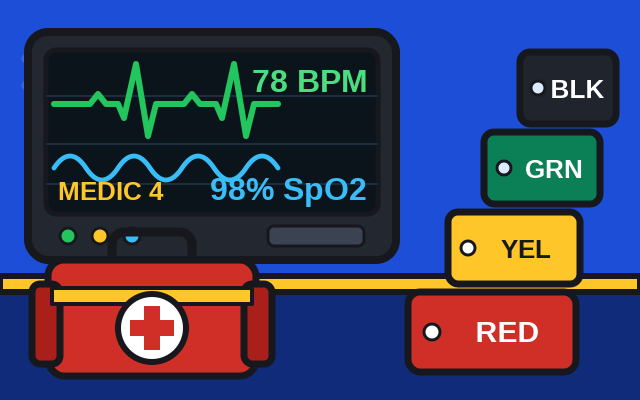
Use it on a real shift
EMT simulator: Run Medic 4: size up scene safety, treat life threats in the right order, read vital signs and snap START triage tags.
Adult normal vital signs reference chart
Adult ranges from Arizona's EMS guidelines (adapted from the NASEMSO model), the American Heart Association and the CDC. Always read vital signs together with the patient's skin, breathing effort and mental status.
| Vital Sign | Normal Adult Range | Low Alert | High Alert | EMT Field Note |
|---|---|---|---|---|
| Heart rate (pulse) | 60 - 100 a minute | Under 60 (bradycardia) | Over 100 (tachycardia) | Feel the rate and strength of the pulse at the wrist (radial pulse). |
| Breathing rate | 12 - 20 a minute | Under 12 (bradypnea) | Over 20 (tachypnea) | Watch how deep the chest rises and how hard the patient works, not only the count. |
| Blood pressure (systolic) | Under 120 mmHg | Under 90 (hypotension) | 130 or more (high blood pressure) | Under 90 warns of shock (AZ T3G); normal is under 120, high is 130 or more (AHA). |
| Oxygen saturation (SpO2) | 94% or more | Under 94% (hypoxia) | None (100% is the top) | Protocols give oxygen to keep SpO2 at 94% or more. AZ T3G. |
| Blood sugar (glucose) | 70 - 99 mg/dL fasting | Under 70 low; treat under 60 | 200 or more (high) | Under 70 is low and 70-99 fasting is normal (CDC); EMS treats under 60 with symptoms (AZ T3G). |
| Mental status (AVPU) | A (alert) | V, P or U | None | Alert, responds to Voice, responds to Pain, Unresponsive (AZ T3G). |
How vital signs change from infant to adult
Younger children have faster heart and respiratory rates and lower systolic blood pressure than adults. The table is the general vital signs table of Arizona's EMS guidelines up to 12 years old; from 13, use the adult chart above.
| Age | Heart rate (a minute) | Respiratory rate (a minute) | Systolic blood pressure (mmHg) |
|---|---|---|---|
| 0 - 3 months | 110 - 160 | 35 - 55 | 65 - 85 |
| 3 - 6 months | 110 - 160 | 30 - 45 | 70 - 90 |
| 6 - 12 months | 90 - 160 | 22 - 38 | 80 - 100 |
| 1 - 3 years | 80 - 150 | 22 - 30 | 90 - 105 |
| 3 - 6 years | 70 - 120 | 20 - 24 | 95 - 110 |
| 6 - 12 years | 60 - 110 | 16 - 22 | 100 - 120 |
Hypotension in a child: systolic BP under 70 + (2 x age in years) from 1 to 10 years old, and under 90 from 10 years on.
Key EMT vital sign terms
Tachycardia and bradycardia
An adult pulse over 100 a minute is tachycardia; under 60 is bradycardia (AZ T3G). Feel whether the pulse is strong or weak.
Tachypnea and bradypnea
Adult breathing over 20 a minute is tachypnea; under 12 is bradypnea (AZ T3G). Breathing too slow or shallow needs bag-valve-mask breaths.
Hypoxia (SpO2 under 94%)
Pulse oximetry reads the oxygen in the blood. Protocols give oxygen to keep SpO2 at 94% or more (AZ T3G).
Hypotension (systolic under 90)
Over 10 years old, a systolic blood pressure under 90 is hypotension, a sign of shock (AZ T3G). Nitroglycerin needs a systolic over 100.
Hypoglycemia
Blood sugar under 70 mg/dL is low (CDC). EMS treats under 60 with symptoms, with oral glucose only if the patient is alert (AZ T3G).
AVPU mental status
A quick check: Alert, responds to Voice, responds to Pain, or Unresponsive (AZ T3G).
Questions people ask
What are the normal adult vital signs for EMT exams?
Arizona's EMS guidelines (adapted from the NASEMSO model) give an adult heart rate of 60-100 a minute and a respiratory rate of 12-20 a minute, give oxygen to keep SpO2 at 94% or more, and call a systolic blood pressure under 90 hypotension. The American Heart Association calls a systolic under 120 normal, and the CDC calls blood sugar under 70 mg/dL low.
At what SpO2 reading should an EMT give oxygen?
Protocols such as Arizona's give oxygen to keep SpO2 at 94% or more. Below 94%, check the airway and breathing, then give oxygen: a nasal cannula for a calm patient, stepping up to a non-rebreather mask as needed.
What blood pressure counts as hypotension in an adult?
For anyone 10 years or older, a systolic blood pressure under 90 mmHg (Arizona's EMS guidelines). The same guidelines give nitroglycerin only when the systolic pressure is over 100.
Why are infant and child vital signs different from adult ranges?
Children have faster heart and breathing rates and lower blood pressure than adults. From 1 to 10 years old, a systolic pressure under 70 plus twice the age in years is hypotension (Arizona's EMS guidelines).
Where this comes from
- Arizona DHS, Triage, Treatment and Transport Guidelines (from the NASEMSO model), vital signs page
- American Heart Association, blood pressure categories
- CDC, low blood sugar
- CDC, diabetes tests
Last changed . Rules change, and states and employers add their own: at work, follow theirs. Found a mistake? How we check, and how to tell us.
More EMT practice
- NREMT-style practice testIndependent EMT exam questions sorted by the five NREMT domains, from scene size-up to operations.
- START triage practice gameTag mass-casualty patients Red, Yellow, Green or Black fast using RPM 30-2-Can Do.
Like this kind of game? See code and memory quizzes and spot-it games.