Dimensional weight calculator and shipping box size calculator
Dimensional weight calculator with editable outside dimensions, scale weight and divisor. Compare two cartons side by side, then use the shipping box size calculator to allow room for cushioning.
Compare packed cartons
Use the divisor and dimension rounding required for your service. Enter the outside measurements after that rounding. This estimate rounds each resulting weight up to a whole pound.
Comparison: Carton B bills 10 lb less in this estimate. This comparison does not establish fit, protection, or actual price.
Shipping box size calculator
For one rectangular item, estimate the minimum interior dimensions with equal clearance on every face.
Minimum inside carton (L × W × H)
11 × 8 × 7 inItem dimension + twice the chosen clearance. Actual packaging may need more space or an outer box. Measure outside after packing.
Independent practice. The carton's grid, load ratings, wrapping allowance and all rates in the game are invented. For real shipments, follow packaging instructions and the carrier's current measurement and rating rules.
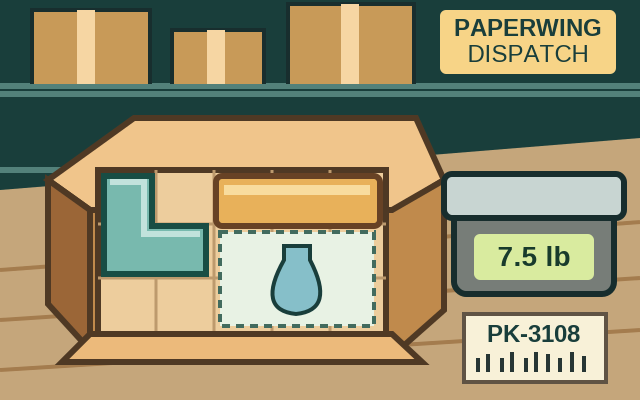
Use it on a real shift
Shipping Clerk simulator: Choose cartons, rotate irregular goods into the grid, wrap fragile items, weigh orders and compare fictional shipping rates. Play free.
From carton dimensions to the invoice
Take a finished 18 × 12 × 12 inch parcel that weighs 5 lb. Its volume is 2,592 cubic inches. With a divisor of 139, the dimensional weight is about 18.65 lb; with whole-pound upward rounding the estimate is 19 lb, not 5 lb.
A 14 × 10 × 8 carton containing the same goods at the same mass would be 1,120 ÷ 139 = 8.06 lb before rounding, or 9 lb in this example. That is only useful if the smaller box still fits and protects everything.
Before buying a label
- Check interior dimensions for the item, its orientation and the necessary packaging.
- Secure the goods and close the package. Measure the longest outside extent in each direction, using the service's rounding rule.
- Weigh the entire package, including the carton and wrapping. Check its load capacity.
- Apply the carrier's dimensional divisor and compare against actual weight. Request a quote for your destination, service and applicable surcharges.
The calculator answers the arithmetic; the packing bench lets you practice the spatial and budget decisions behind it.
Questions people ask
How do I calculate dimensional weight?
Multiply the three outside dimensions, then divide by the applicable dimensional divisor. Choose the greater of actual and dimensional weight under the carrier's rounding rules.
Do internal or external dimensions matter?
Inside measurements tell you whether goods and protection fit. Outside measurements of the finished package are used for dimensional rating.
Does the calculator tell me the shipping price?
No. Rates depend on your service, agreement, destination, surcharges and rules. It estimates billable weight using the rounding method shown; use your carrier's quote for the actual invoice.
Where this comes from
- FedEx, dimensional weight and right-sizing
- FedEx, dimensional weight calculator
- FedEx, packing breakables
Last changed . Rules change, and states and employers add their own: at work, follow theirs. Found a mistake? How we check, and how to tell us.